Almost every Malaysian kitchen ends the day with some leftover nasi in the rice cooker. It's tempting to leave it there, or push it to the back of the fridge for nasi goreng later in the week. Cooked rice is one of the leftovers most worth handling carefully, though. Here's how long it really keeps, why it needs more care than most leftovers, and how to cool, store and reheat it safely in a hot Malaysian kitchen.
The short answer
The safest guidance is to cool cooked rice and get it into the fridge within about an hour, then eat it within 24 hours. Reheat it only once.
Guidance does vary. The UK's NHS and Food Standards Agency recommend eating leftover rice within a day. Some other food safety agencies allow cooked leftovers, rice included, up to 3 to 4 days in the fridge. That longer window assumes the rice was cooled quickly and the fridge is properly cold.
In practice, rice left out on a warm counter for a few hours before it reaches the fridge is common in Malaysian homes. So the safer rule is the one to follow: aim to eat refrigerated rice by the next day. If you've lost track of when it was cooked or how long it sat out, throw it away.
Why rice needs extra care
Most leftovers spoil in ways you can see or smell. Rice is different because of a bacterium called Bacillus cereus, which is common in soil and often present on uncooked rice.
- Its spores can survive cooking.
- When cooked rice sits at warm temperatures, the spores germinate and the bacteria multiply.
- As they grow, they can produce toxins that reheating does not destroy.
That last point is the important one. Frying day-old rice until it's sizzling won't make it safe if it sat out too long the day before. The damage happens during the cooling and storage stage, not at reheating.
The illness this causes is sometimes called "fried rice syndrome". It usually means vomiting or diarrhoea, and it's more of a concern for young children, older family members, pregnant women and anyone who is unwell.
The Malaysian kitchen problem: heat and humidity
Bacteria grow fastest in the so-called danger zone, roughly 5°C to 60°C. On a normal Malaysian day, room temperature sits right in that range all day and all night. A pot of rice left on the stove after lunch "for later" spends its whole afternoon in ideal conditions for bacteria.
A few habits to watch:
- Rice left in an unplugged or switched-off rice cooker. The insulated pot keeps rice warm for hours, which is exactly what bacteria like.
- The keep-warm setting. Keep-warm is designed to hold rice hot, above the danger zone. It's fine for a few hours between meals, but rice dries out and quality drops the longer it sits. Don't treat keep-warm as overnight storage, and check your rice cooker's manual for how long the maker recommends.
- Takeaway nasi lemak or nasi campur. Food from a stall has often been sitting out already. Eat it soon after buying. If you won't get to it within a couple of hours, refrigerate it straight away or don't keep it.
How to cool rice quickly
The goal is to get rice out of the warm range as fast as possible, ideally into the fridge within an hour of cooking.
- Take it out of the pot. Don't let it cool slowly in the rice cooker or a deep pot.
- Spread it out. Put it in shallow containers or on a tray in a thin layer so the heat escapes quickly.
- Split large amounts. Several small containers cool much faster than one big tub.
- Let the steam go, then cover. Once it stops steaming heavily, cover it to stop it drying out or picking up fridge smells.
- Into the fridge. Don't wait for it to be fully cold on the counter. Shallow portions of warm rice can go straight in.
Your fridge should be at 5°C or below. If yours has a dial rather than a display, a cheap fridge thermometer is worth having, especially if the fridge is old or opened often.
Label the container with the day it was cooked, even just with a marker on masking tape. It removes the guesswork later.
Freezing cooked rice
If you won't eat leftover rice by the next day, freezing is the better choice.
- Cool it quickly as above, then freeze it as soon as it's cool, not after it has sat in the fridge for a couple of days.
- Freeze in flat, single-meal portions in freezer bags or containers. Flat packs freeze and thaw faster.
- For the best quality, use it within about a month. It stays safe for longer if kept frozen solid, but it gets drier and harder.
- Reheat from frozen in the microwave, or thaw in the fridge (never on the counter) and eat it within 24 hours of thawing.
Frozen rice works very well for nasi goreng, as the grains stay separate.
How to reheat leftover rice safely
- Reheat until steaming hot all the way through, with no cold patches in the middle.
- In the microwave, sprinkle in a little water, cover loosely, and stir halfway so it heats evenly.
- For nasi goreng, fry it on high heat and keep it moving until every part is piping hot.
- Reheat only once. Only take out the portion you'll eat, and leave the rest in the fridge.
- Don't put reheated leftovers back in the fridge for another day.
Day-old rice really does make better nasi goreng. Just make sure it was cooled fast and kept in the fridge, not left out overnight in the rice cooker.
What about nasi lemak, beriani and other rice dishes?
The same rules apply, with a few extra points:
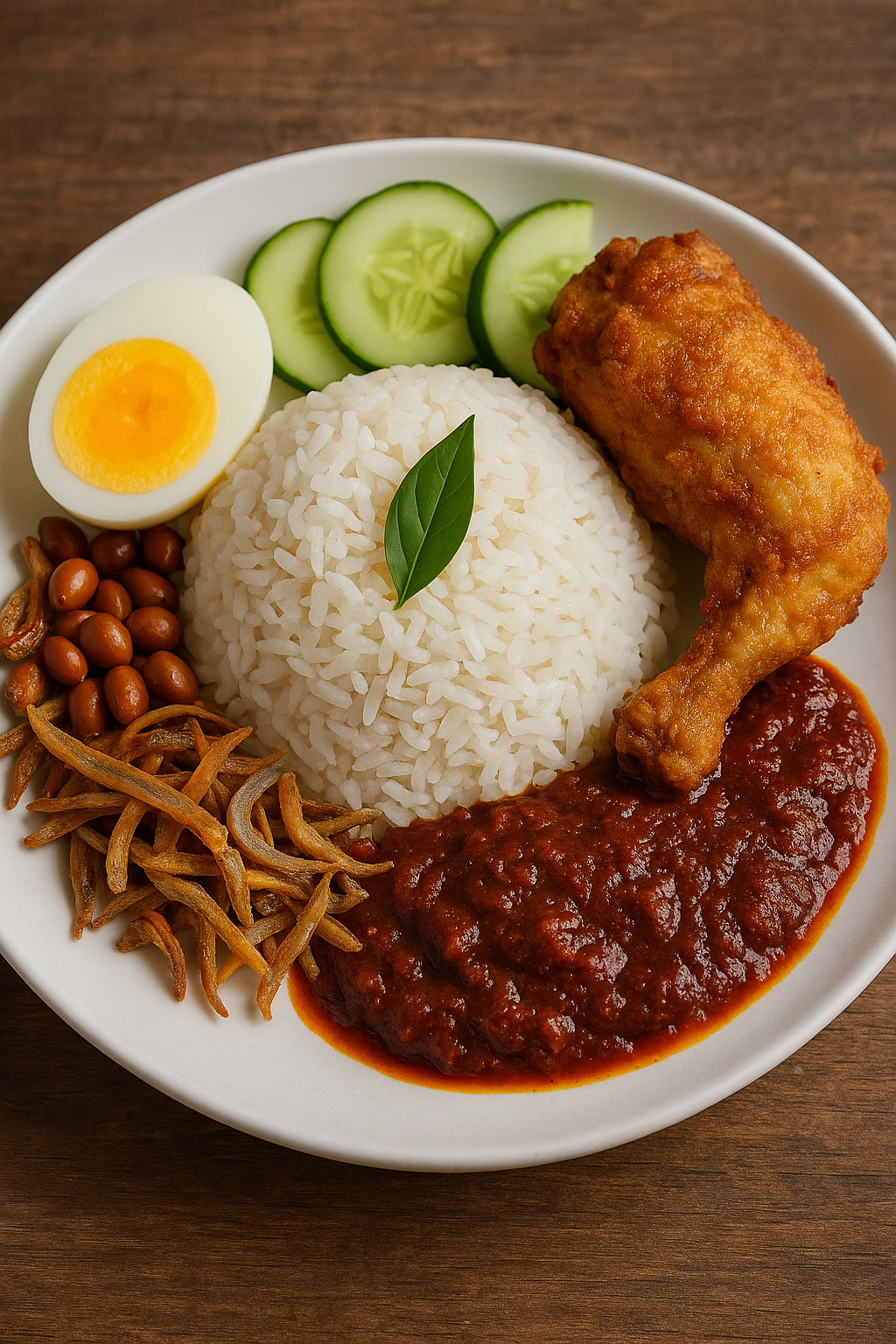
- Nasi lemak and other santan rice. Coconut milk spoils quickly in the heat. Treat santan rice as a same-day food at room temperature, and if you refrigerate it, eat it by the next day.
- Nasi beriani, nasi minyak and nasi tomato. Cool and store them like plain rice. Any chicken or meat cooked with them follows the same next-day rule.
- Bubur. Porridge holds a lot of heat. Divide it into shallow containers so it cools quickly, and eat it within a day.
- Lunchbox rice. If you pack rice for work or school, keep it cold with an ice pack or put it in a fridge on arrival until you eat it.
Can you tell if rice has gone bad?
Sometimes. Rice that smells sour, feels slimy or has any mould should go straight in the bin.
The catch is that the toxins from Bacillus cereus don't change how rice looks or smells. Rice can seem completely normal and still make someone ill. Go by how it was handled and how long it's been stored, not by the sniff test. When in doubt, throw it out.
The easiest fix: cook closer to what you'll eat
The best way to avoid risky leftover rice is to have less of it. A few habits help:
- Measure rice with the cup that came with your rice cooker, and notice how many cups your household actually finishes per meal.
- If you deliberately want leftover rice for nasi goreng or packed lunches, cool and portion it right after the meal instead of leaving it in the pot.
- If you always end up with extra, cook a little less and keep a pack of frozen rice as backup.
Keeping track with SuperSuri
Leftover rice is easy to forget at the back of the fridge, and that's when it becomes a guessing game. SuperSuri is a free kitchen app for Malaysian households that tracks what's in your kitchen and warns you before things expire, so the rice you saved for nasi goreng gets used in time. It also suggests Malaysian recipes based on what you already have, which makes it easier to plan a meal around leftovers.