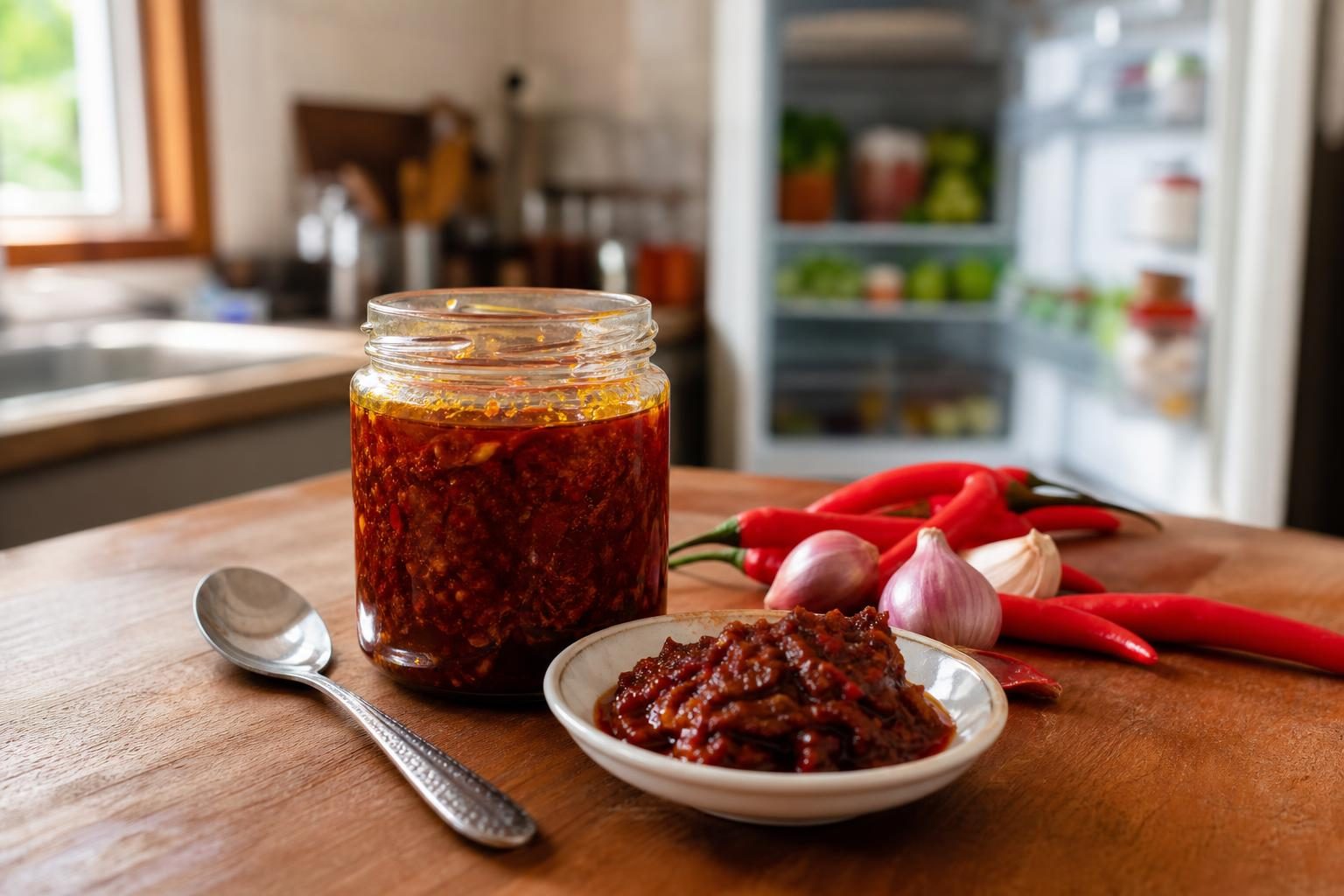
Most of us cook sambal in a big batch. Blending, frying and waiting for the oil to split takes too long to do for one meal. That leaves a jar in the fridge and a familiar question a week later: is this still okay to eat? The answer depends on what kind of sambal it is, how it was cooked and how you've been handling the jar. Here's a practical, play-it-safe guide.
The short answer
These are conservative guidelines for sambal kept in a clean, airtight container in the fridge:
- Cooked sambal tumis (chilli paste fried until pecah minyak, no seafood or meat): about 1 week, and up to 2 weeks if it was cooked thoroughly and handled with clean, dry spoons
- Cooked sambal with ikan bilis, udang kering, prawns, sotong or meat: about 3 to 4 days, the same as other cooked leftovers containing seafood or meat
- Raw sambal belacan (fresh pounded chilli and belacan): best eaten the same day, and no more than 2 to 3 days in the fridge
- Sambal belacan with lime or calamansi already squeezed in: eat it the same day if you can. The fresh flavour fades fast and it turns watery
- Store-bought jarred or packet sambal, once opened: follow the label. Many say to refrigerate after opening and use within a set time. If there's no guidance, treat it like homemade cooked sambal
- Frozen cooked sambal: around 2 to 3 months for best quality
You'll find longer times online. Some people say well-fried sambal keeps for a month or more. Guidance varies a lot, so stick to the shorter times above, especially if you have young children, elderly family members or anyone pregnant at home.
Why some sambals last longer than others
Cooking time and oil
Sambal tumis that's been fried slowly until the oil separates has had much of its water cooked out. Less water means a less friendly environment for bacteria and mould. A sambal that was only briefly fried and still looks wet and bright red won't keep as well.
A layer of oil on top helps keep air off the surface, but it is not a preservative on its own. Oil can't make sambal safe at room temperature, and it doesn't replace the fridge.
Added ingredients
The moment you add ikan bilis, dried shrimp, fresh prawns, sotong, chicken or eggs, treat the sambal like any cooked dish containing those ingredients. Sambal sotong or sambal udang left over from lunch is a leftover, not a condiment. Use it within a few days.
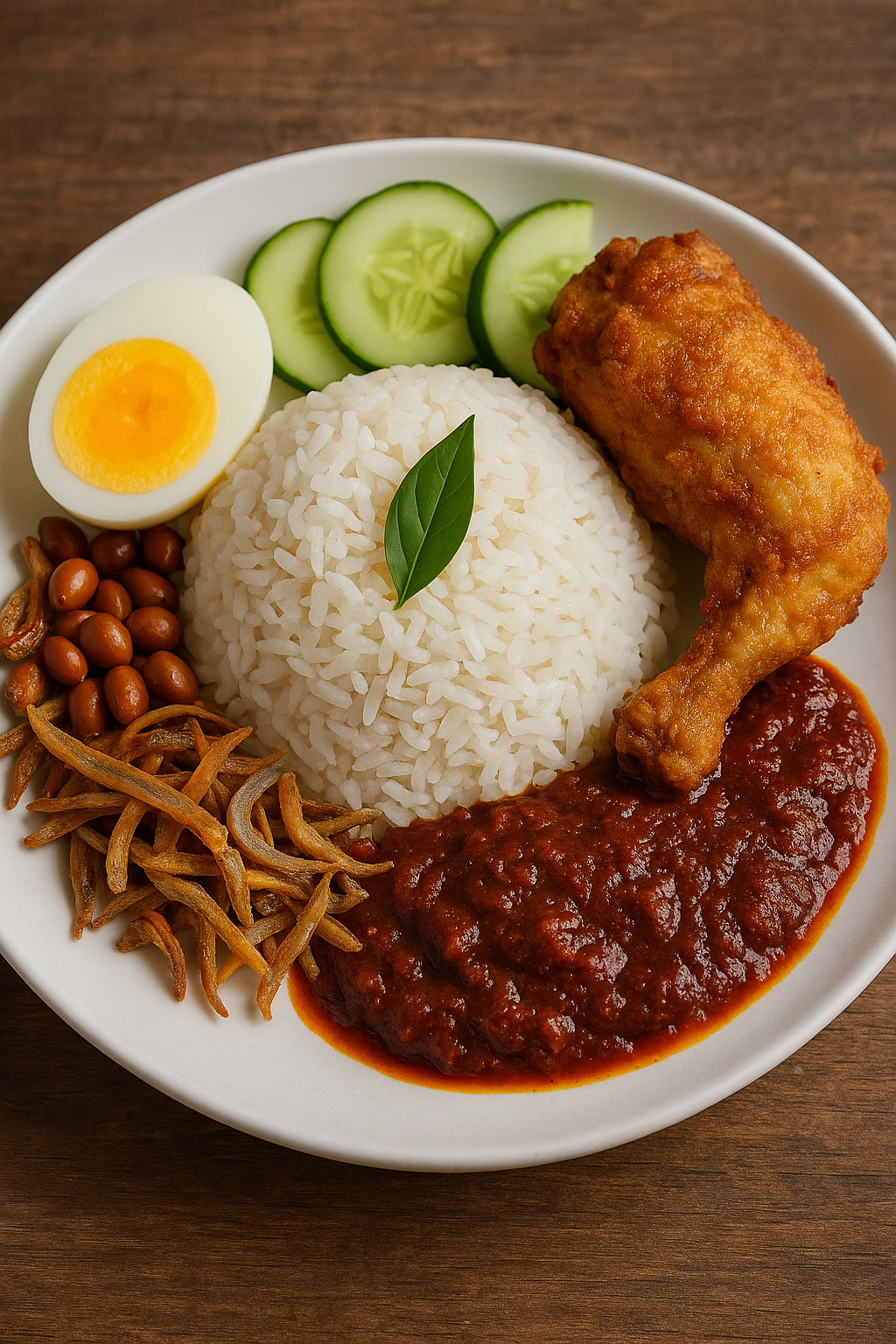
Onions and shallots are worth a mention too. Sambal heavy with sliced onions, like a sambal for nasi lemak, tends to go soft and sour sooner than a smooth paste.
Raw versus cooked
Raw sambal belacan uses fresh chillies that haven't been heated. They can carry more microbes, and the lime juice and fresh ingredients break down quickly. It's meant to be made fresh, which is why many households pound a small amount just before eating.
How to store sambal so it lasts
How you handle the jar matters as much as what's in it.
- Cool it properly, but not for hours. Let freshly cooked sambal cool for a short while, then get it into the fridge. Common food safety advice is to refrigerate cooked food within about 2 hours. In a hot Malaysian kitchen, sooner is better. Spreading it in a shallow container helps it cool faster.
- Use clean, dry glass jars or airtight containers. Glass doesn't stain or hold smells the way plastic does. Wash and dry jars completely before filling them. Water droplets left inside shorten shelf life.
- Always use a clean, dry spoon. This is the big one. A spoon that's been in your mouth, in the rice or in a wet curry brings in bacteria and moisture. That's a common reason sambal goes mouldy early.
- Smooth the top and cover with a thin layer of oil. This limits air contact. Wipe the rim of the jar clean before closing.
- Store it at the back of the fridge, not the door. The door warms up every time someone opens the fridge, which happens a lot in a busy household.
- Label the jar with the date. A strip of masking tape and a marker saves a lot of guessing later.
- Don't leave the jar on the dining table through the meal. Scoop out what you need into a small dish and put the jar straight back.
Freezing sambal: the best option for big batches
If you cook a big pot of sambal tumis, freeze most of it the same day and keep only about a week's worth in the fridge.
- Portion it first. Spoon sambal into a clean ice cube tray, freeze until solid, then pop the cubes into a labelled freezer bag or container. One or two cubes is about right for a plate of nasi goreng or a small pot of sambal telur.
- Or flatten it in a bag. Fill a zip bag, press it into a thin flat layer, squeeze out the air and freeze. You can break off pieces as needed.
- Thaw safely. Move portions to the fridge to thaw, or add frozen cubes straight into a hot wok. Don't thaw sambal on the counter for hours.
- Reheat until hot all the way through, and don't refreeze sambal that's been thawed and reheated.
Cooked plain sambal tumis freezes well. Raw sambal belacan with lime doesn't really. The texture and fresh flavour suffer, so make that in small amounts instead.
Sambal with seafood can be frozen, but freeze it soon after cooking, not after it's already been sitting in the fridge for a few days.
Signs your sambal has gone bad
Throw it out if you notice any of these:
- Mould of any colour (white, green, grey or black fuzzy spots), on the surface, the rim or under the lid
- A sour, fermented or "off" smell that's different from the usual spicy, savoury aroma
- Bubbles, fizzing or a hiss when you open the jar, or a bulging lid
- Slimy texture or liquid separating in a way that wasn't there before
- You can't remember when you made it
Don't scrape off mould and eat the rest. In soft, moist foods like sambal, mould can spread below the surface where you can't see it. If one part is mouldy, discard the whole jar.
Also, don't rely on the spiciness. Chilli doesn't make food safe, and spoiled sambal can still taste hot.
Quick tips for less sambal waste
- Cook smaller batches more often, or cook big and freeze most of it straight away.
- Keep a "use first" spot at the front of a fridge shelf for jars that are nearing their limit.
- Use up older sambal in cooked dishes. Nasi goreng, mee goreng, sambal telur, kangkung goreng and fried rice vermicelli are all good ways to finish a jar that's still within its safe time.
- Buy chillies with a plan. When chilli prices dip at the wet market, it's tempting to buy a lot. Only buy what you can blend, cook and freeze that week.
Keeping track with SuperSuri
The hardest part is usually remembering when that jar went into the fridge. SuperSuri is a free kitchen app for Malaysian households. It tracks what's in your kitchen and warns you before things expire, so a forgotten jar of sambal doesn't turn into a mouldy surprise. It can also suggest Malaysian recipes that use what you already have, which helps when you're wondering what to cook with half a jar of sambal tumis.