You buy a fresh bunch of daun ketumbar for one bowl of soup or a plate of fried rice. Two days later the rest is a slimy, yellowing clump at the back of the fridge. Coriander is one of the fastest herbs to spoil, and our heat and humidity don't help. With a few minutes of prep when you get home, though, a bunch can stay usable for well over a week. Here's how to do it, which method suits which kitchen, and what to do with coriander you can't finish in time.
Why coriander goes bad so quickly
Coriander has thin, delicate leaves that lose water fast, so it wilts within hours at Malaysian room temperature. In the fridge it fails for the opposite reason. Moisture gets trapped around the leaves, especially in a tightly closed plastic bag, and they start to turn dark and slimy. That usually begins in the middle of the bunch, where the rubber band squeezes the stems together.
So the goal is simple: keep the stems hydrated, keep the leaves dry, and give the bunch some air. Every method below is a version of that.
First steps as soon as you get home
Whatever method you choose, do this first. It makes the biggest difference.
- Remove the rubber band or tie. A tightly bound bunch rots from the inside.
- Pick through the bunch. Throw out any yellow, wilted or slimy sprigs. One rotting sprig speeds up the rest.
- Decide whether to wash now or later. Washing just before use is the simpler option, because wet leaves spoil faster in storage. If the bunch is very muddy (wet market coriander with roots often is), you can wash it now. Just dry it very thoroughly with a salad spinner or by rolling it gently in a clean cloth or paper towels.
- Deal with the roots. If your coriander came with roots, cut them off and store them separately (more on that below). They carry soil and hold moisture.
Method 1: The jar method (best for longest freshness)
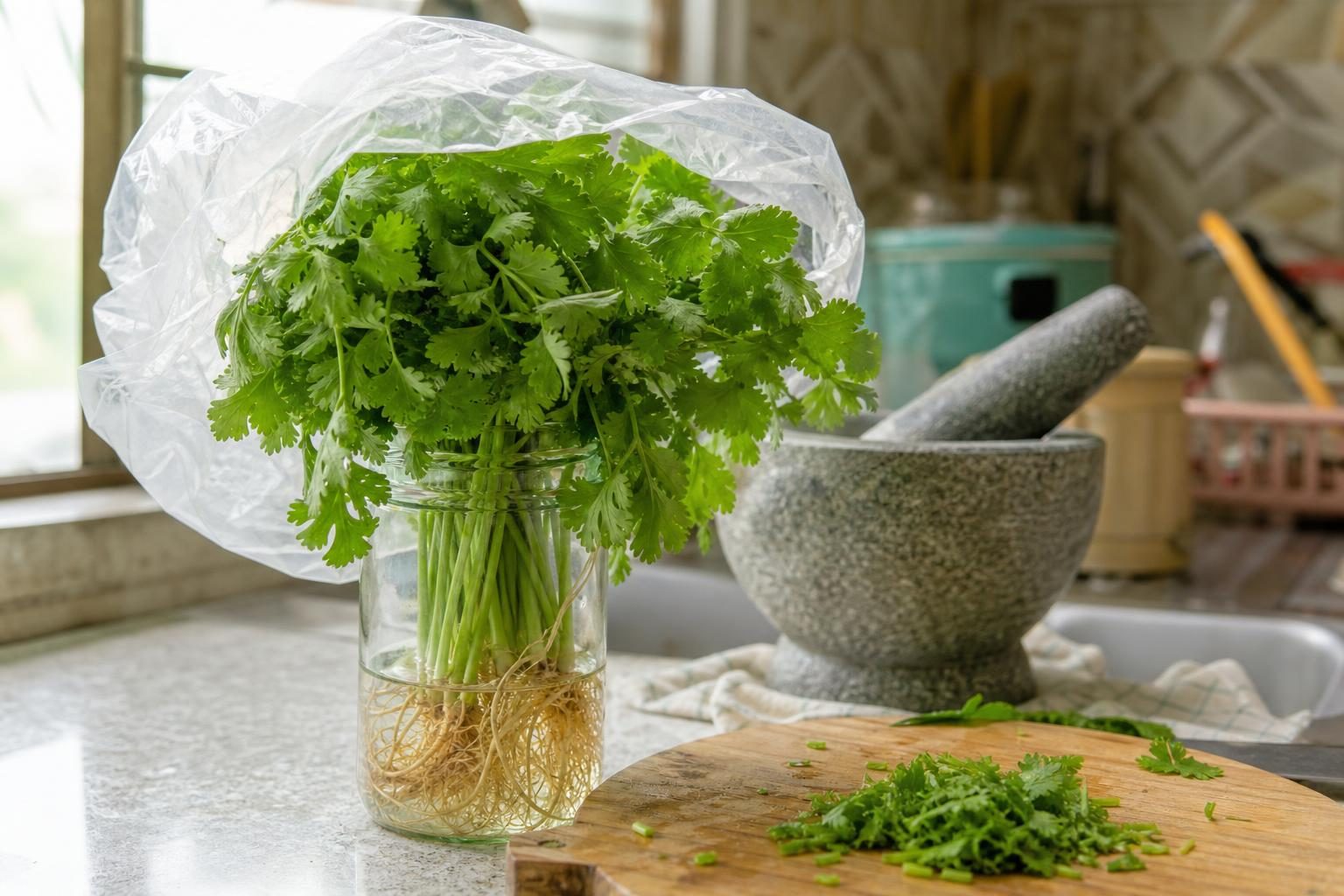
This treats coriander like a bunch of flowers, and it's the method most people find keeps it going longest.
- Trim the bottom of the stems a little, so they have a fresh cut.
- Stand the bunch upright in a jar or glass with a few centimetres of clean water. Only the stems should sit in the water, not the leaves.
- Cover the leaves loosely with a plastic bag, like a tent. Don't seal it tight.
- Put the jar in the fridge, on a shelf where it won't be knocked over.
- Change the water every two days or so, or sooner if it looks cloudy.
Stored this way, coriander often stays fresh for around one to two weeks. Results vary with how fresh it was when you bought it and how cold your fridge is.
Downside: it takes up shelf space, and a tall jar doesn't fit every fridge. If yours is packed with lauk containers, Method 2 may suit you better.
Method 2: The paper towel and container method
This one is more compact and works well in a crowded fridge.
- Make sure the coriander is dry.
- Line an airtight container (or a zip bag) with a dry paper towel.
- Lay the coriander in loosely. Don't pack it in.
- Cover with another paper towel, close the lid and keep it in the vegetable drawer.
- Every few days, check the paper towel. If it's damp, swap it for a dry one and remove any sprigs that are going off.
Expect roughly a week, sometimes a little longer. The paper towel soaks up excess moisture, which is the main thing that turns coriander slimy.
What doesn't work well
- Leaving it on the counter. In a Malaysian kitchen it will usually wilt within a day. Use it the same day or get it into the fridge.
- Leaving it in the original sealed plastic bag. Condensation builds up, and you'll often find it slimy within a few days.
- Storing it wet. If you rinse it, dry it properly first.
- Putting it right at the back of a very cold fridge. Delicate herbs can get frost-damaged and go dark and limp. The vegetable drawer or a middle shelf is safer.
Don't throw away the roots
Coriander roots (akar ketumbar) have a stronger, earthier flavour than the leaves. They're great pounded into pastes for tom yam, marinades for ayam goreng, or Thai-style dipping sauces.
- Scrub them well under running water to get rid of all the soil, then dry them.
- Keep them in a small container in the fridge and use them within a few days.
- Or freeze them. They freeze well and can go straight from the freezer into the batu lesung or blender.
How to freeze coriander
If you bought a big bunch and know you won't get through it, freezing is better than letting it rot. One thing to know first: frozen coriander goes soft and dark once thawed. It's no good as a fresh garnish on top of bubur or mee soup. It's perfectly fine for cooking, though, in curries, soups, sambal, fried rice and marinades.
Two easy ways:
- Chopped and frozen loose: Wash, dry very well, chop, then spread on a tray to freeze before tipping it into a bag. You can then take out a pinch at a time.
- Ice cube tray: Chop the leaves and stems, pack them into an ice cube tray, and top up with a little water or cooking oil. Freeze, then pop the cubes into a labelled bag. Drop a cube straight into your pot.
For best flavour, use frozen coriander within a few months. It stays safe for longer if kept frozen, but the aroma fades over time.
How to tell if coriander has gone bad
Throw it out if you notice:
- Slimy or mushy leaves or stems
- Dark green-black patches, especially in the centre of the bunch
- A sour or rotten smell instead of that fresh coriander scent
- Any mould
Leaves that are only slightly limp but still green and smell normal are fine to cook with. You can sometimes perk them up by standing the stems in cold water for a while. Slightly yellowed leaves aren't harmful, but they'll have less flavour. If only a few sprigs are bad, remove them and check the rest carefully.
Buying tips that help it last
- Look for perky, bright green leaves with no yellowing or wet, dark spots. Open the bunch a little if you can and check the middle.
- Bunches with roots from the wet market often last a bit longer than cut, pre-packed supermarket coriander.
- Buy coriander last on your shopping trip, and get it into the fridge soon after you're home. A hot car boot is hard on herbs.
- Buy only what you'll use. A small bunch used fully beats a big one half-wasted. Don't confuse it with daun sup (Chinese celery), which looks a little similar but tastes quite different.
Quick rule: stems in water, leaves dry and loosely covered, fridge, not freezer-cold. Freeze anything you can't finish within a week.
Use it up before it turns
The easiest way to avoid wasting coriander is to plan a couple of dishes for it when you buy it. Scatter it over sup ayam, fold it into nasi goreng or telur dadar, blend it into a green sambal or chutney, or add stems and roots to a curry paste. The stems have plenty of flavour, so chop them finely and use them along with the leaves instead of throwing them out.
How SuperSuri can help
If half-used bunches of herbs keep getting forgotten in your fridge, SuperSuri can help. It's a free app for Malaysian households that keeps track of what's in your kitchen and reminds you before things spoil. It also suggests Malaysian recipes that use what you already have, so that leftover coriander ends up in tonight's dinner instead of the bin.