Lemongrass, or serai, turns up in so many Malaysian dishes, from rendang and asam pedas to tom yam, sambal tumis and a simple pot of serai tea. The trouble is that it usually comes in a bundle of five or six stalks when you only need two, and the rest dries out in the vegetable drawer before you get to them. The good news is that lemongrass is one of the easiest ingredients to store well. Here is how to keep it fresh for days, weeks or months, depending on when you plan to cook with it.
The quick answer
- On the counter: a few days, best standing in a little water, out of direct sun.
- In the fridge: roughly one to two weeks, wrapped in slightly damp kitchen paper and kept in a bag or container.
- In the freezer: several months. Whole stalks, slices or blended paste all freeze well.
These are general guidelines. How long your serai actually lasts depends on how fresh it was when you bought it, so always check it before using.
Choosing lemongrass that will last
Storage starts at the wet market or supermarket. Fresher stalks simply keep longer.
- Look for stalks that feel firm and heavy, with a pale, tightly packed lower bulb.
- The base should look moist and pale, not dry, shrivelled or brown.
- Give a stalk a gentle bend or scratch. Fresh serai smells strongly of citrus straight away.
- Avoid bundles with slimy patches, dark spots or a sour smell.
If you grow your own serai at home, cut stalks only as you need them. A clump in a pot or garden is the freshest storage there is.
How to store lemongrass at room temperature
If you will cook with it within a few days, you don't need to refrigerate it.
- Trim a thin slice off the root end.
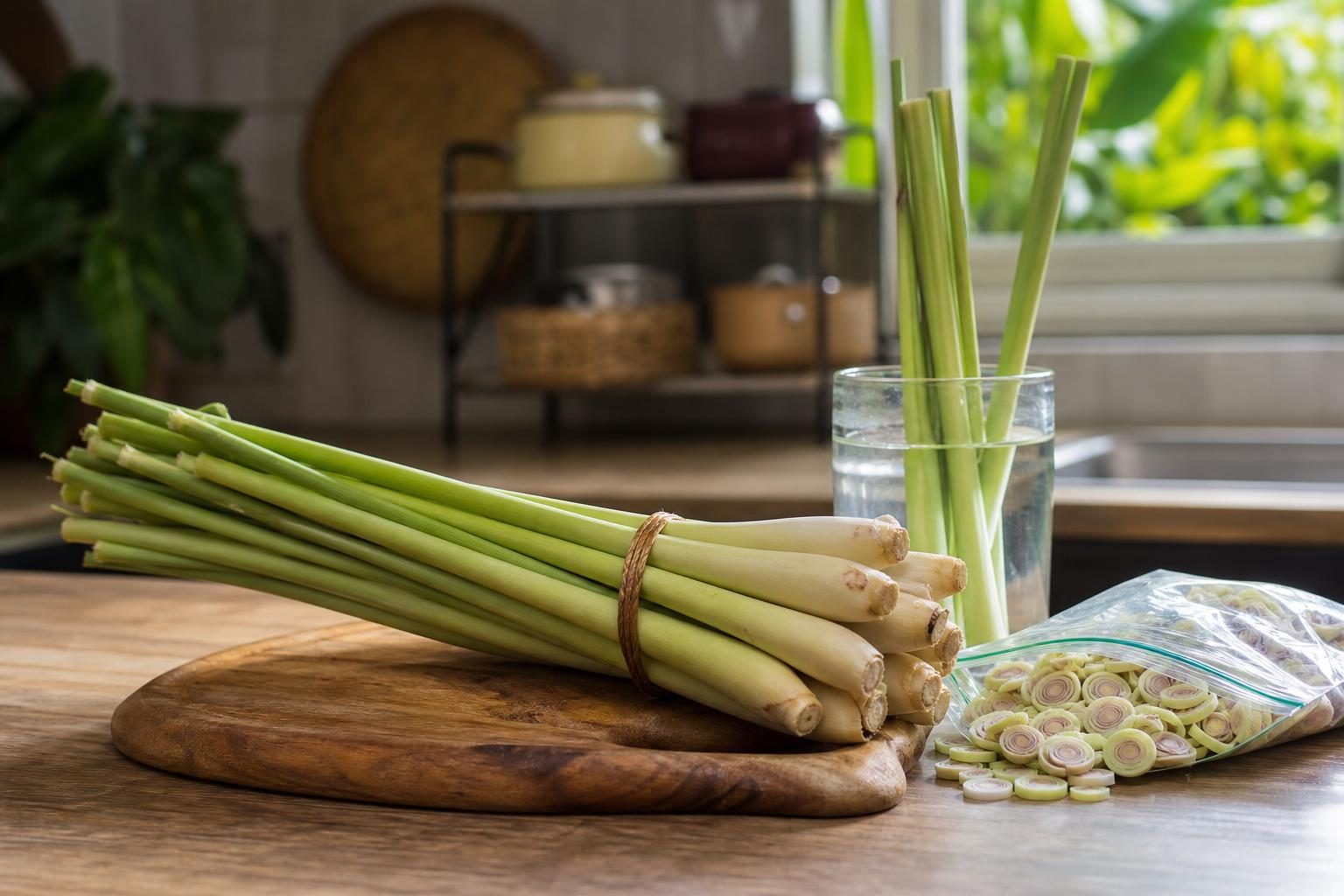
- Stand the stalks upright in a glass or jar with a few centimetres of water, like flowers.
- Keep it somewhere bright but out of direct sun and away from the stove.
- Change the water every day or two so it doesn't go cloudy or smelly.
In our hot, humid weather, stalks left lying dry on the counter tend to wilt and dry out quickly, so the water glass makes a real difference. A bonus: stalks kept in water sometimes grow roots, and you can then plant them in a pot.
How to store lemongrass in the fridge
The fridge is the best choice if you'll use it within a week or two.
- Don't wash it yet unless it is visibly dirty. Extra moisture encourages rot. If you do rinse it, dry it well.
- Trim off any dry, damaged outer leaves.
- You can cut off the long, grassy green tops to save space. Keep them for tea or stock (see below).
- Wrap the stalks loosely in slightly damp kitchen paper. Damp, not dripping.
- Put them in a zip bag or airtight container and store in the vegetable drawer.
Check them every few days. If the paper has dried out, dampen it again; if it's soggy, replace it. Stored this way, serai typically stays usable for around one to two weeks. It slowly loses aroma over time, so it's at its best in the first week.
What about cut or sliced lemongrass?
Once sliced, lemongrass dries out and loses its fragrance much faster. Keep sliced serai in a small airtight container in the fridge and use it within a few days. If you won't get to it that quickly, freeze it instead.
How to freeze lemongrass
Freezing is the best way to stop wasting serai, and frozen lemongrass works perfectly in cooked dishes like curries, rendang, soups and sambal. It does go a little soft once thawed, so it's less ideal for raw salads like kerabu, but for most Malaysian cooking you won't notice a difference.
Frozen lemongrass keeps safely for a long time, but it's best used within a few months for good flavour. Label your bags with the date.
Option 1: Freeze whole stalks
The simplest method. Trim the root end and green tops, remove the tough outer layer, and wrap the stalks tightly in cling film or put them in a freezer bag with the air pressed out. When you need one, take it out and use it straight from frozen. For dishes where you bruise the stalk and simmer it whole, like asam pedas or tom yam, there's no need to thaw.
Option 2: Freeze sliced lemongrass
Slice the tender lower part into thin rounds and spread them on a tray to freeze for an hour or two, then transfer to a freezer bag. Because they were frozen separately, they won't clump, and you can grab a small handful at a time for stir-fries or sambal.
Option 3: Freeze lemongrass paste
If you often blend serai for rempah, this saves the most time.
- Roughly chop the tender lower parts.
- Blend with just a little cooking oil or water until fairly smooth.
- Spoon into an ice cube tray, freeze, then pop out the cubes into a freezer bag.
Each cube is ready to drop into the wok when you're frying your rempah. You can also freeze a ready-made blend of serai, shallots, garlic, ginger and chilli the same way.
A safety note on oil pastes: Don't leave homemade lemongrass paste in oil at room temperature, especially if it contains garlic, shallots or other fresh aromatics. Fresh ingredients kept under oil can create conditions for harmful bacteria. Keep any paste you make in the fridge and use it within a few days, or freeze it for longer storage.
Don't throw away the green tops
The long leafy tops are too fibrous to eat, but they still carry flavour. Instead of binning them:
- Tie a few into a knot and simmer them in water for a simple serai drink, with pandan if you have some.
- Add them to chicken or vegetable stock.
- Toss them into the pot when cooking rice for a light fragrance.
You can freeze the tops in a bag and use them whenever you make stock or tea.
How to tell if lemongrass has gone bad
Throw it out if you notice any of these:
- Mould, white or dark fuzzy spots anywhere on the stalk.
- Slimy or mushy texture, especially at the base.
- A sour or off smell instead of a fresh, citrusy one.
- Dark brown or black discolouration through the inner layers.
Stalks that are just a bit dry on the outside are usually fine. Peel off the outer layers and check the inside. If the core is still firm and fragrant, use it. If it smells of almost nothing, it's not unsafe, but it won't add much flavour, so you may need to use more.
Quick tips for using serai before it spoils
- Only buy what you need if your market sells loose stalks.
- Freeze half a bundle the day you buy it, so you're not racing to use it all.
- Bruise stalks with the back of a knife or a pestle before simmering to release more aroma, which means you can use fewer stalks.
- Plan a couple of serai dishes in the same week, like a curry one day and serai tea or tom yam another.
Let SuperSuri keep track for you
It's easy to forget about that bundle of serai at the back of the fridge. SuperSuri is a free kitchen app for Malaysian households that keeps track of what's in your kitchen, reminds you before things expire, and suggests Malaysian recipes using ingredients you already have, so your lemongrass ends up in a pot of rendang instead of the bin. It works in English and Bahasa Malaysia and is available on the App Store and Google Play.